What Remains
A Group Exhibition

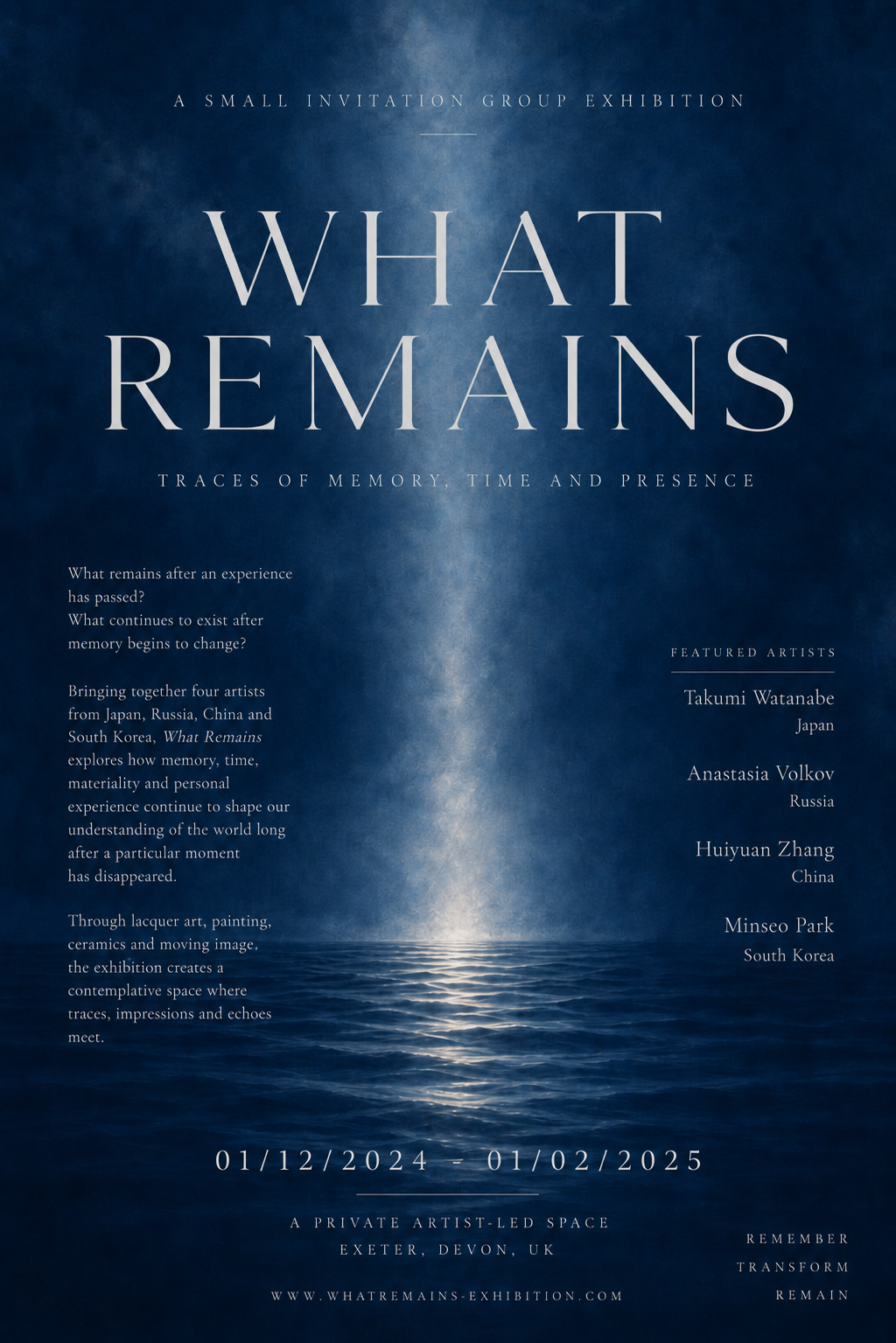
What Remains

01/12/2024 - 01/02/2025  ·  Exeter, Devon, UK

Scroll ↓
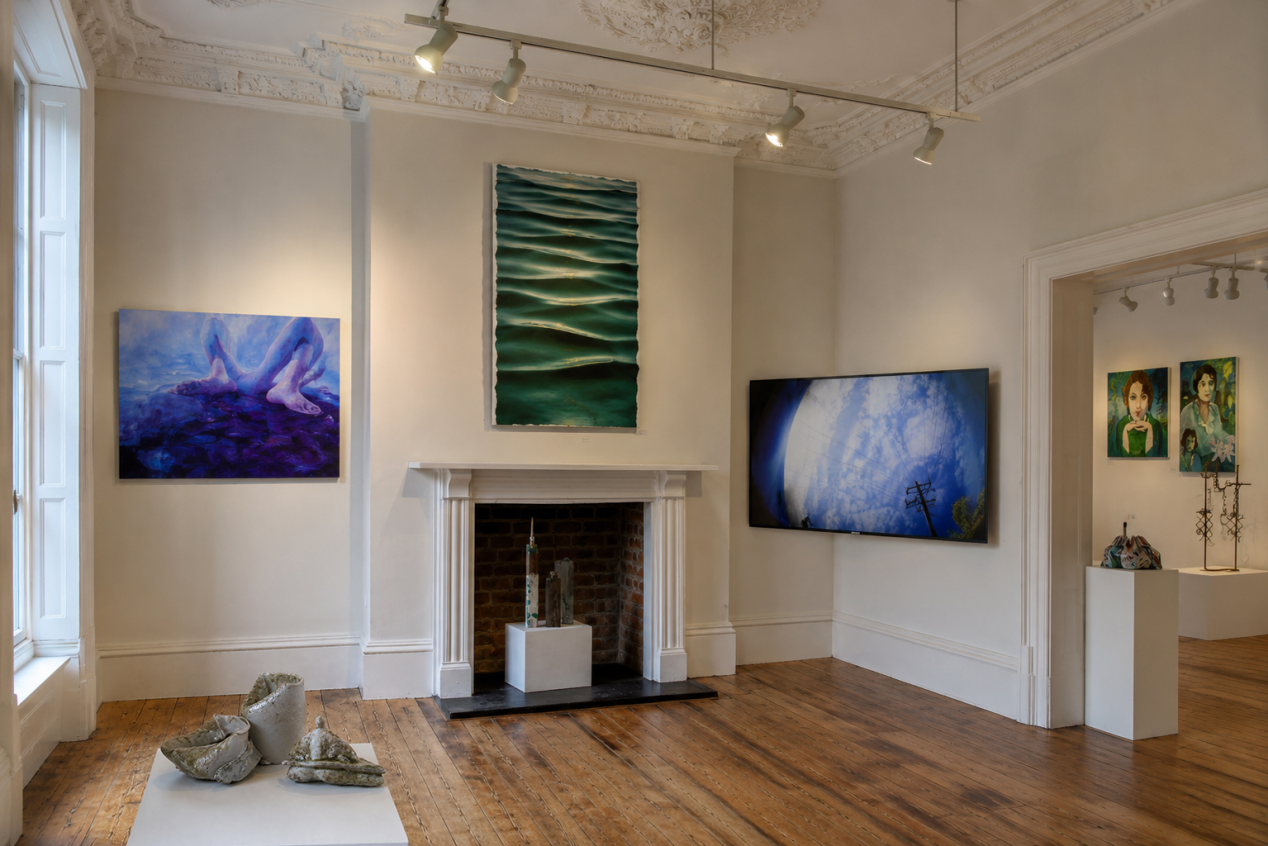
Exhibition Installation View
Exhibition view, What Remains

Presence in Absence

What remains after an experience has passed? What continues to exist after memory begins to change?

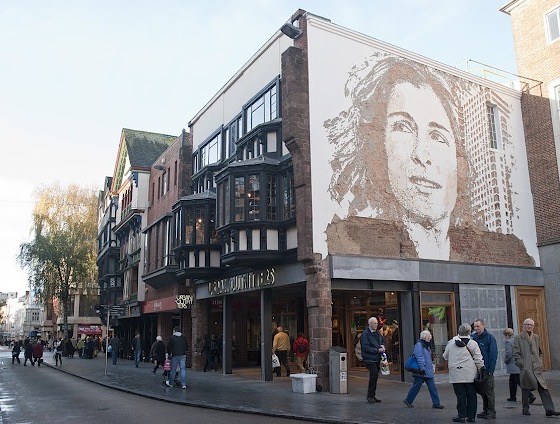
What Remains is a small invitation based group exhibition presented in a private artist led space in Exeter, Devon. Bringing together four artists from Japan, Russia, China, and South Korea, the exhibition explores how memory, time, materiality, and personal experience continue to shape our understanding of the world long after a particular moment has disappeared.

In contemporary life, we are surrounded by an endless flow of information, images, and experiences. New events constantly replace old ones, while memories gradually lose their clarity and certainty. Yet not everything vanishes. Certain emotions remain unexpectedly vivid. Particular places continue to occupy our thoughts. Objects retain traces of touch, use, and history. Even after their original context has faded, these remnants continue to influence how we perceive ourselves and our surroundings.

The exhibition emerged from a series of conversations among artists working across different cultural and disciplinary contexts. Although their practices vary significantly, each artist engages with questions concerning what is preserved, what is transformed, and what continues to endure through time. Through lacquer art, painting, ceramics, and moving image, the exhibition creates a space for reflection on the subtle yet persistent presence of memory within contemporary life. Presented during the winter months, What Remains invites visitors into a quieter mode of viewing. Rather than offering immediate conclusions, the exhibition encourages careful observation and contemplation, allowing each work to unfold gradually through its material, emotional, and conceptual layers.
Exhibition Detail

"What remains is not necessarily the event itself, but the traces it leaves behind"

— Exhibition Theme

Memory & Transformation

At its core, What Remains examines the relationship between memory and transformation.

01

Fragments of Memory

Memory is rarely complete. It survives through fragments, impressions, sensations, and traces. As time passes, the details of an event may fade, but the emotional resonance often remains. The exhibition considers how these remnants continue to shape identity, perception, and lived experience.

02

Creative Practice as Method

For the participating artists, creative practice becomes a method of engaging with what cannot be fully preserved. A forgotten place, a childhood memory, a physical gesture, or a material process may serve as the starting point for an artwork. Through making, artists reconstruct, reinterpret, and reconsider experiences that exist somewhere between presence and absence.

03

Traces That Remain

The works in the exhibition do not attempt to recover the past in its original form. Instead, they explore the ways in which memories evolve, shift, and acquire new meanings over time. The exhibition proposes that what remains is not necessarily the event itself, but the traces it leaves behind and the influence those traces continue to exert upon the present.

An Intimate Exhibition

What Remains was conceived as an intimate exhibition that prioritises depth of engagement over scale.

Taking place within a privately operated artist space, the exhibition offers an alternative to the pace and structure often associated with larger institutional exhibitions. The setting allows visitors to encounter each work closely and encourages a more personal relationship between artwork and viewer.

Although the participating artists come from different cultural backgrounds and work across distinct mediums, they share a common interest in the persistence of experience. Their works examine how time becomes embedded within materials, how memories inhabit physical objects, and how personal histories continue to influence present realities.

The exhibition approaches absence not as emptiness but as a condition of transformation. What disappears rarely vanishes completely. Instead, it leaves behind marks, impressions, and echoes that continue to shape the way we understand ourselves and our environment. Through painting, ceramics, lacquer, and moving image, the artists reveal the subtle ways in which the past remains active within the present.

Rather than presenting fixed narratives, the exhibition encourages open interpretation. Visitors are invited to bring their own memories, associations, and experiences into dialogue with the works, allowing new meanings to emerge through the act of viewing.

Four Voices, One Conversation

The exhibition brings together four invited artists from Japan, Russia, China, and South Korea: Takumi Watanabe, Anastasia Volkov, Huiyuan Zhang, and Minseo Park. Through distinct artistic languages and cultural perspectives, their works collectively explore the enduring relationship between memory, materiality, and human experience.

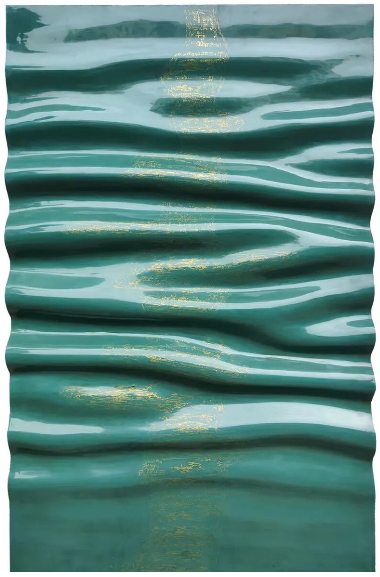
Water Echo by Takumi Watanabe
Japan

Takumi Watanabe

Water Echo

Takumi Watanabe's practice is rooted in traditional lacquer techniques while engaging with contemporary concerns surrounding memory, craftsmanship, and cultural continuity. The slow and labour intensive process of lacquer production becomes an integral part of the work itself, recording time through accumulation, repetition, and transformation.

For Watanabe, material is never passive. Layers of lacquer preserve evidence of touch, labour, and duration, transforming the surface into a repository of memory. His work reflects upon the relationship between tradition and contemporary experience, revealing how cultural knowledge continues to evolve while retaining traces of its origins.

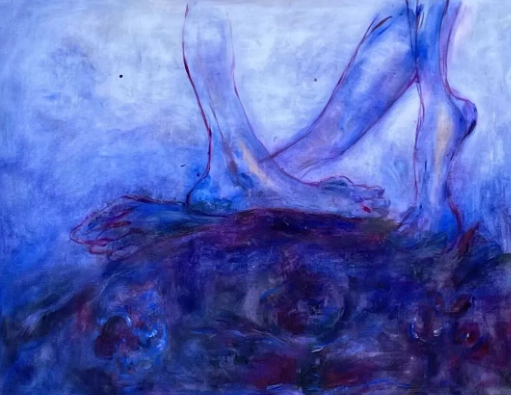
Feet Memory by Anastasia Volkov
Russia

Anastasia Volkov

Feet Memory

Working across painting and installation, Anastasia Volkov investigates psychological space, perception, and emotional memory. Her practice explores the complex relationship between internal experience and external reality, often creating images that exist between observation and imagination.

Volkov's work embraces ambiguity and fragmentation, allowing memories to appear as shifting visual forms rather than fixed narratives. Through colour, texture, and spatial composition, she examines how emotional experiences remain present even when their original circumstances have faded.

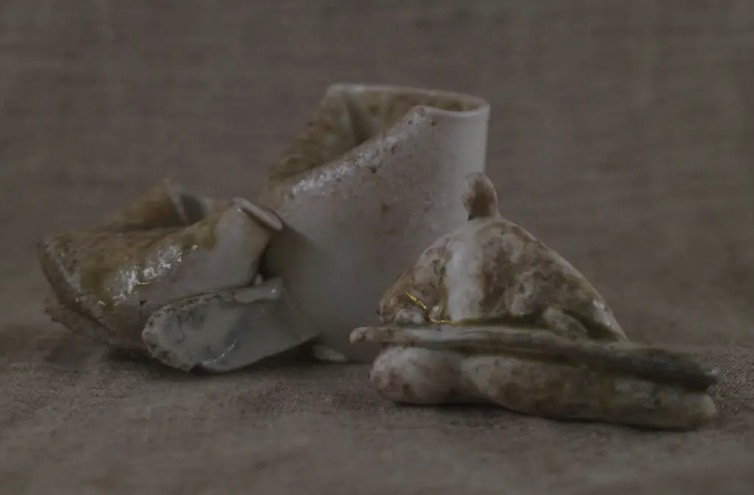
Acoustic Ceramic by Huiyuan Zhang
China

Huiyuan Zhang

Acoustic Ceramic

Huiyuan Zhang's ceramic practice centres on the relationship between material transformation and human experience. Clay undergoes continual change throughout the processes of forming, drying, and firing, carrying with it the marks of time, gesture, and physical interaction.

In Acoustic, the vessel functions not only as an object but also as a metaphorical container for memory and perception. The work explores how material can retain evidence of touch and process, creating a quiet dialogue between permanence and impermanence. Through subtle variations in form and texture, the work reflects upon the ways in which experiences become embedded within physical matter.

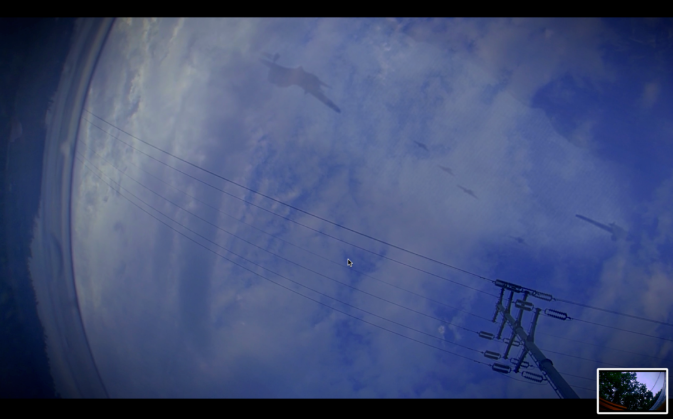
Life Journey by Minseo Park
South Korea

Minseo Park

Life Journey

Minseo Park's moving image practice explores sensation, memory, and intercultural understanding through experimental and documentary approaches. Her work is informed by an interest in perception and the ways in which personal experiences can be translated into shared emotional encounters.

Water: Life Journey uses water as both subject and metaphor. Fluid, unstable, and continuously changing, water becomes a reflection of memory itself. Through poetic visual sequences and fragmented narratives, the work considers how individual experiences are carried through time and transformed into collective forms of understanding.

What Persists

The exhibition creates a contemplative environment in which visitors are encouraged to slow down and engage with the subtle details embedded within each work. Through diverse materials and approaches, the artists reveal how traces of experience continue to exist long after their original moment has passed. From the layered surfaces of lacquer and the tactile qualities of ceramics to the emotional spaces of painting and the temporal structure of moving image, each work offers a different perspective on what it means to remember, preserve, and transform.

Ultimately, What Remains is not a search for definitive answers. It is an invitation to reflect on the fragments, impressions, and experiences that continue to accompany us through time. In doing so, the exhibition suggests that what remains is often not what we consciously choose to keep, but what quietly persists beneath the surface of memory itself.

What Remains - Exhibition

"What remains is often not what we consciously choose to keep,
but what quietly persists beneath the surface of memory itself."

— What Remains